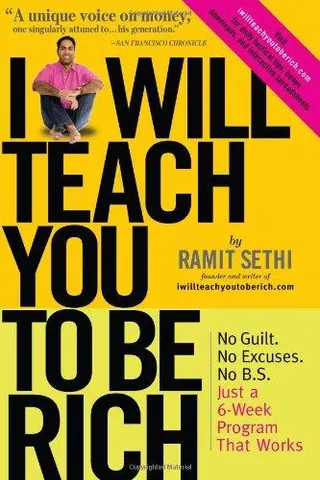
I Will Teach You to Be Rich
Library · Money and personal finance
- Author: Ramit Sethi
- FinSimLab editorial rating: 3/5
- Reading difficulty: Easy
- Finance level: Beginner
- Topics: Finance, Habits and personal growth, Investing
- Published: 2009
- Length: Long
FinSimLab's own rating, based on usefulness, clarity, rigour, how current it is and what it adds to your learning. It is not a reader review score.
An automated system of accounts, saving and investing so finances take little of your time.
What is it about?
Sethi structures the book as a six-week programme: sort out your accounts, automate transfers, invest in low-cost funds and spend guilt-free on what matters to you. It is written for the US market, so the specific accounts and credit card advice may not apply elsewhere, but the automation method does.
What does it give you?
- How to automate saving and investing on payday.
- Why low-cost index funds fit a simple plan.
- How to decide what to spend on without guilt.
Is it for you?
Young people with a steady income who want a practical system rather than theory.
When to read it: Build. You want to sort out your finances and build a base.
Where does it apply?
Based on the US. The idea of automating saving and investing on payday carries over as it is. The retirement accounts, credit cards and credit scores it discusses are specific to the US.
Concepts it covers
Automation, Budgeting, Index investing
What does it not give you?
- Products and tax rules outside the US.
- Investing beyond a few basic index funds.
How does it explain it?
A six-week programme in a direct tone, with scripts, checklists and concrete steps. (Practical, Step-by-step method)
What does it add?
Teaches you to automate your money so the plan works without relying on willpower.
Already read something similar?
- It shares automating so you do not rely on willpower with Atomic Habits. If you have read Atomic Habits, this one mainly adds the system applied to your accounts and investing. Atomic Habits
What can you read next?
- The Psychology of Money (in the "I want to start investing" path)
- The Algebra of Wealth (in the "I want better habits and discipline" path)
Related Academy guides
- The 50/30/20 rule: how to budget your money
- What is an ETF and how to invest in one
- What is Dollar Cost Averaging (DCA) and why it works
Calculators to put it into practice
More money and personal finance books
Descriptions written by FinSimLab for educational purposes. They do not summarise the books and are not investment advice.