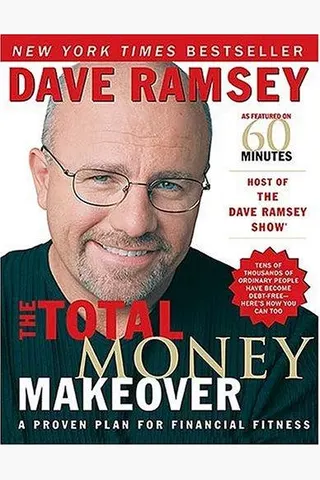
The Total Money Makeover
Library · Money and personal finance
- Author: Dave Ramsey
- FinSimLab editorial rating: 3/5
- Reading difficulty: Easy
- Finance level: Beginner
- Topics: Finance, Habits and personal growth
- Published: 2003
- Length: Medium length
We include it as a critical read: it is influential and has ideas worth knowing, but also major simplifications. Read it knowing what it will not give you.
FinSimLab's own rating, based on usefulness, clarity, rigour, how current it is and what it adds to your learning. It is not a reader review score.
A step-by-step plan to get out of debt, build a cushion and start saving for the long term.
What is it about?
Ramsey sets out seven steps in order: a small emergency fund, pay off every debt except the mortgage with the snowball method, complete the emergency fund and then invest. His stance against all debt is strict and debatable in some cases, but the order of priorities is useful for anyone in debt.
What does it give you?
- In what order to tackle debts with the snowball method.
- How much to keep in an emergency fund before investing.
- How to build a budget where every dollar has a job.
Is it for you?
People with outstanding loans or credit cards looking for behavioural guidelines to budget and get out of debt, knowing the method was designed for the United States.
When to read it: Build. You want to sort out your finances and build a base.
Where does it apply?
Based on the US. Dave Ramsey's method offers behavioural guidelines for budgeting and getting out of debt, but the order of his steps and his advice on credit cards, retirement saving and investing were designed for the United States. They should not be applied automatically in other countries. In particular, pausing contributions to a retirement plan with an employer match can have an opportunity cost. Weigh the cost of the debt, the terms of the plan and your own situation before making that decision.
Concepts it covers
Debt, Emergency fund, Budgeting
What does it not give you?
- When cheap debt, such as a low-rate mortgage, can make sense.
- Investment strategy beyond contributing every month.
How does it explain it?
Seven steps in order, with testimonials from people who got out of debt. (Step-by-step method, Anecdotal)
What does it add?
Gives very clear behavioural guidelines for budgeting, building an emergency fund and getting out of debt. Its order of steps reflects the US context and is worth adapting.
Related Academy guides
- Debt avalanche vs snowball: which method eliminates debt faster
- Emergency fund: how much you need and where to keep it
- The 50/30/20 rule: how to budget your money
Calculators to put it into practice
More money and personal finance books
Descriptions written by FinSimLab for educational purposes. They do not summarise the books and are not investment advice.