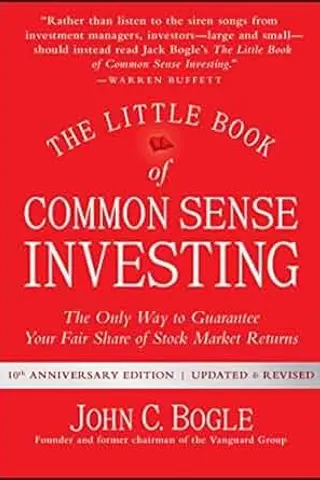
The Little Book of Common Sense Investing
Library · Investing
- Author: John C. Bogle
- FinSimLab editorial rating: 5/5
- Reading difficulty: Easy
- Finance level: Beginner
- Topics: Investing, Finance
- Published: 2007
- Length: Short
FinSimLab's own rating, based on usefulness, clarity, rigour, how current it is and what it adds to your learning. It is not a reader review score.
The Vanguard founder's case for index funds and against high fees.
What is it about?
Bogle shows with numbers how fees and portfolio turnover eat into returns year after year, and why a fund that tracks the whole market tends to beat most actively managed funds. It is short and to the point.
What does it give you?
- How much fees can take away over several decades.
- Why the average investor earns less than the fund they invest in.
- How an index fund works.
Is it for you?
New investors who want to understand why index funds are so often recommended.
When to read it: Start investing. You already save and want to become an investor.
Where does it apply?
Based on the US. The data and funds it cites are American. The argument about costs applies anywhere; the index funds available elsewhere, and their tax treatment, differ.
Concepts it covers
Index investing, Fees, Long term
What does it not give you?
- How to build a full portfolio by age.
- The detail of the funds and ETFs available outside the US.
How does it explain it?
Short and argued with numbers: each chapter compares costs, returns and investor behaviour. (Data-driven, Essay)
What does it add?
The most direct explanation of why costs decide much of a fund's return.
Already read something similar?
- It shares index investing and the weight of fees with A Random Walk Down Wall Street. If you have read A Random Walk Down Wall Street, this one mainly adds the case on fees with numbers, in a few pages. A Random Walk Down Wall Street
- It shares long-term index funds with The Simple Path to Wealth. If you have read The Simple Path to Wealth, this one mainly adds why costs matter, with data. The Simple Path to Wealth
- It shares the case for indexing and low costs with Menos costes, más rentabilidad. If you have read Menos costes, más rentabilidad, this one mainly adds the original argument, with decades of US market data. Menos costes, más rentabilidad
What can you read next?
- The Simple Path to Wealth (in the "Start from scratch" path)
- Just Keep Buying (in the "I want to start investing" path)
Related Academy guides
- ETF vs Index Fund: What's the Difference and Which Should You Buy?
- What is an ETF and how to invest in one
- What is compound interest and how does it grow your money?
Calculators to put it into practice
More investing books
- A Random Walk Down Wall Street
- Just Keep Buying
- The Simple Path to Wealth
- The Book on Rental Property Investing
- The ABCs of Real Estate Investing
Descriptions written by FinSimLab for educational purposes. They do not summarise the books and are not investment advice.