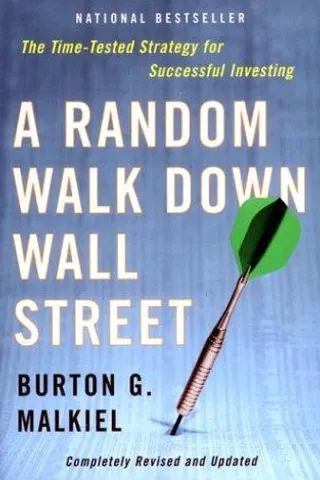
A Random Walk Down Wall Street
Library · Investing
- Author: Burton G. Malkiel
- FinSimLab editorial rating: 4.5/5
- Reading difficulty: Moderate
- Finance level: Intermediate
- Topics: Investing, Psychology
- Published: 1973
- Length: Long
FinSimLab's own rating, based on usefulness, clarity, rigour, how current it is and what it adds to your learning. It is not a reader review score.
Why beating the market consistently is so hard, and what index investing offers instead.
What is it about?
Malkiel reviews historical bubbles, technical and fundamental analysis, and concludes that for most investors the sensible choice is a diversified portfolio of low-cost index funds. The book is updated regularly and includes an asset allocation guide by age.
What does it give you?
- What the efficient market hypothesis says and where it falls short.
- How bubbles form and why they keep happening.
- How to split your portfolio by age and time horizon.
Is it for you?
People torn between picking stocks and buying funds who want arguments backed by data.
When to read it: Become a better investor. You already invest and want to decide better.
Where does it apply?
Based on the US. The funds, tax-advantaged accounts and historical data are American. The argument about how hard it is to beat the market and the age-based allocation apply anywhere; the specific products differ outside the US.
Concepts it covers
Index investing, Market efficiency, Asset allocation
What does it not give you?
- How to analyse individual companies: it argues against doing so.
- Products and tax rules outside the US.
How does it explain it?
Popular science with an academic base: it reviews the history of bubbles and research on markets. (Academic, Data-driven)
What does it add?
Explains with history and data why index investing is the sensible choice for most people.
Already read something similar?
- It shares index investing and the weight of fees with The Little Book of Common Sense Investing. If you have read The Little Book of Common Sense Investing, this one mainly adds the history of bubbles, efficient market theory and how to split a portfolio by age. The Little Book of Common Sense Investing
What can you read next?
Related Academy guides
- What is an ETF and how to invest in one
- ETF vs Index Fund: What's the Difference and Which Should You Buy?
- How to build an investment portfolio from scratch
- Asset allocation and rebalancing: how to maintain your portfolio
Calculators to put it into practice
More investing books
- The Little Book of Common Sense Investing
- Just Keep Buying
- The Simple Path to Wealth
- The Book on Rental Property Investing
- The ABCs of Real Estate Investing
Descriptions written by FinSimLab for educational purposes. They do not summarise the books and are not investment advice.