The Intelligent Investor
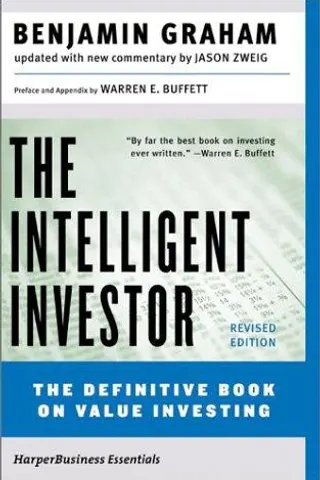
Library · Analysis and investment judgement
- Author: Benjamin Graham
- FinSimLab editorial rating: 4.5/5
- Reading difficulty: Demanding
- Finance level: Advanced
- Topics: Investing, Psychology
- Published: 1949
- Length: Long
FinSimLab's own rating, based on usefulness, clarity, rigour, how current it is and what it adds to your learning. It is not a reader review score.
The book that defines value investing: margin of safety, analysis and discipline in the face of the market.
What is it about?
First published in 1949, it is the classic of value investing. Graham separates the defensive investor from the enterprising one, introduces "Mr. Market" as a moody business partner and argues for buying only with a margin of safety. Its principles still hold: the margin of safety, discipline in the face of the market and the difference between a share's price and the value of the business. Its historical examples and some of its valuation methods, however, should not be applied mechanically to today's market. Current editions include commentary by Jason Zweig that updates the examples. It is a book for going deeper, long and demanding, especially the analysis chapters.
What does it give you?
- What margin of safety is and why it protects you from calculation errors.
- How to use market swings instead of reacting to them.
- Which criteria Graham used to select stocks.
Is it for you?
Investors who already have a grounding in company analysis and want to go deeper into the principles of value investing. If you are starting out, read One Up On Wall Street by Peter Lynch first: a more accessible way into analysing a business.
When to read it: Go deeper. You want your own judgement and demanding reads.
Where does it apply?
Based on the US. The examples, bonds and figures are from the US market. The margin of safety and the attitude towards the market apply on any exchange.
Concepts it covers
Value investing, Valuation, Risk
What does it not give you?
- A simple introduction for complete beginners.
- Valuation criteria to copy as they are: many were designed for the market of its time and need adapting.
How does it explain it?
Technical and demanding, with market examples from its time and current commentary by Jason Zweig in each chapter. (Technical, Academic)
What does it add?
The origin of the margin of safety and of using the market rather than following it.
Already read something similar?
- It shares buying good companies at good prices with The Little Book That Beats the Market. If you have read The Little Book That Beats the Market, this one mainly adds the full framework and the margin of safety. The Little Book That Beats the Market
What can you read next?
Related Academy guides
- How to do a basic fundamental analysis of a stock
- P/E ratio explained: how to value a stock
- P/B ratio explained: price-to-book in fundamental analysis
- How to value a stock: multiples and discounted cash flow
Calculators to put it into practice
More analysis and investment judgement books
- The Most Important Thing
- Common Stocks and Uncommon Profits
- One Up On Wall Street
- The Little Book That Beats the Market
Descriptions written by FinSimLab for educational purposes. They do not summarise the books and are not investment advice.