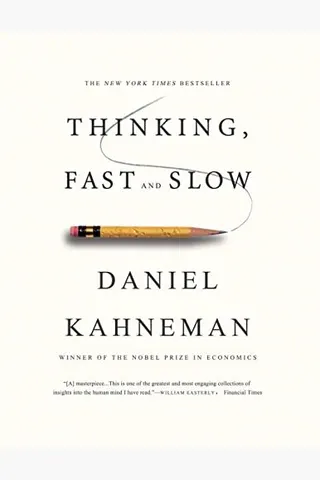
Thinking, Fast and Slow
Library · Psychology of money
- Author: Daniel Kahneman
- FinSimLab rating: 4/5
- Reading: Demanding
- Finance level: Advanced
- Published: 2011
The two modes of thinking Kahneman describes, and the biases that trip us up with numbers and probabilities.
What it covers
Kahneman, winner of the 2002 Nobel Prize in Economics, explains the difference between fast, intuitive thinking and slow, deliberate thinking, and reviews decades of research on biases such as anchoring, loss aversion and overconfidence. It is a psychology book, not a finance one, but many of its ideas explain common investing mistakes.
What you will learn
- What loss aversion is and why a fall hurts more than an equal gain pleases.
- How anchoring shapes what we consider a reasonable price.
- Why overconfidence leads people to trade too much.
Who it is for
Readers with patience for a dense text who want to understand where behavioural economics comes from.
Concepts
Biases, Financial behaviour, Risk
What you will not learn
Direct personal finance applications: you make the link to money yourself.
Already read a book on this?
- It shares biases and behavioural economics with Misbehaving. If you have read Misbehaving, this one mainly adds the underlying research, in more depth. Misbehaving
We suggest you continue with
Related Academy guides
- Panic Selling: Why We Sell at the Worst Possible Moment
- FOMO Investing: How Fear of Missing Out Destroys Portfolios
- What is risk tolerance in investing and why it matters
More psychology of money books
Descriptions written by FinSimLab for educational purposes. They do not summarise the books and are not investment advice.